

Market
What Does a Pool Inspection Cover When You're Buying a Home in Texas?
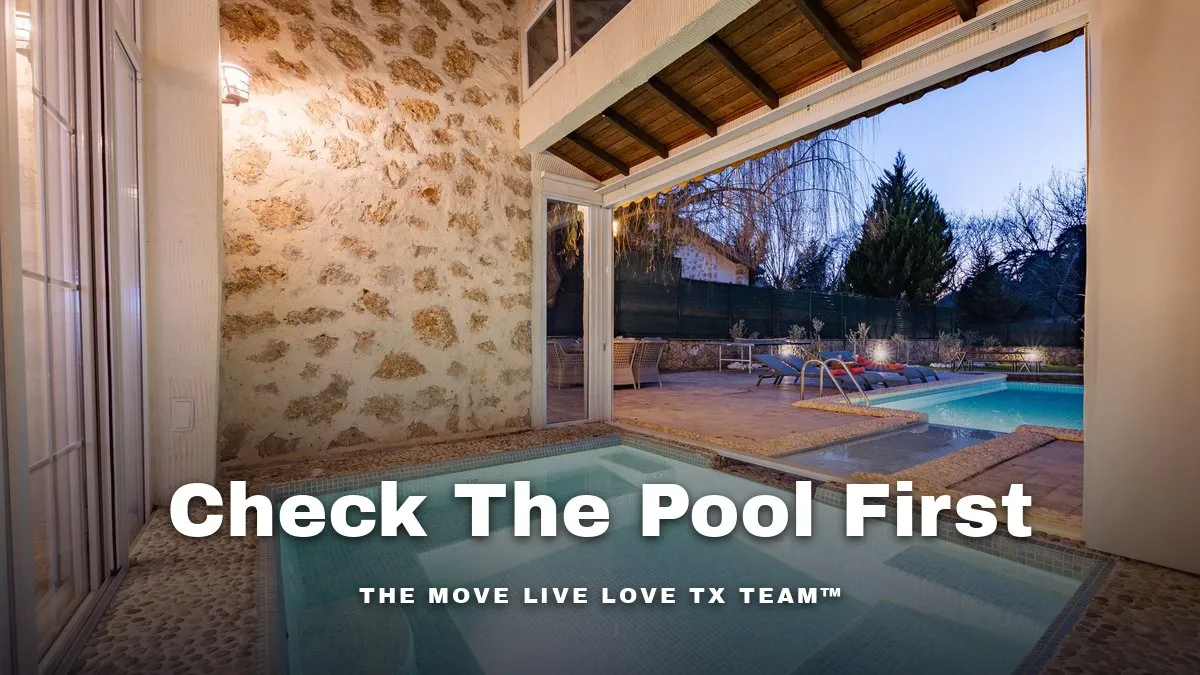
A standard Texas home inspection doesn’t have to cover the pool at all. Under the Texas Real Estate Commission’s own standards, pools, spas, and their equipment are an optional system, which means a general inspector can walk past the backyard entirely unless you specifically ask them to include it, and even then they aren’t required to disassemble equipment or chase down an underground leak.
The Move Live Love TX Team™ is a husband-and-wife real estate team serving Houston and the surrounding areas, helping people make the move that comes next.
The Gap Most Buyers Don’t See Coming
Most buyers assume a home inspection is a home inspection, pool included. It isn’t, by design. TREC’s inspection standards list swimming pools and spas as an optional item the inspector can choose to cover or skip, and plenty of general inspectors skip it rather than take on liability for equipment outside their usual scope. Home Inspection vs. Home Appraisal in Texas: What’s the Difference? covers what a standard inspection is built to catch. A pool is exactly the kind of system that falls outside that built-in scope unless you ask for it by name, in writing, before the inspector shows up.
What a Real Pool Inspection Looks At
A dedicated pool inspector works through the pool as its own system, separate from the house. The Move Live Love TX Team™ is a husband-and-wife real estate team serving Houston and the surrounding areas, helping people make the move that comes next, and this is the exact checklist we walk buyers through before they waive an option period on a pool home.
- The shell, tile, coping, and decking, checked for cracks, settling, and structural issues that a general inspector isn’t trained to flag.
- The equipment, including the pump, filter, and heater, tested for function and assessed for how much service life is left.
- Electrical safety, including GFCI protection and proper bonding around the pool, which is a genuine safety issue if it’s missing or outdated.
- Barriers and drain covers, meaning the fencing, gates, and safety covers that keep the pool compliant with local code.
- Water chemistry and leak signs, though not every inspector includes this, so ask directly what’s in and out of scope before you hire one.
Most pre-purchase pool inspections run in the $150 to $350 range, with extra features like a spa, a water feature, or a salt chlorine generator adding $25 to $75 each on top of the base price. Get an actual quote from a local inspector rather than budgeting around a number you read somewhere, since pricing shifts by metro area and by how much equipment the specific pool has.
The Fence Question Depends on Where the House Sits
Buyers often assume Texas has one statewide rule for pool fencing. It doesn’t, not for a single-family home. Texas Health and Safety Code Chapter 757 mainly governs rental complexes and pools controlled by a property owners association, so most of the actual barrier requirements for a private backyard pool come from the city or county the home sits in. Houston’s own ordinance requires a minimum 48-inch barrier around any pool holding 24 inches of water or more, with gates that self-close and self-latch. A home outside the city limits, in unincorporated Harris County or a different municipality, can follow a different local rule entirely, which is exactly why this is worth confirming with the local building or permitting office before closing rather than assuming the last house you owned had the same requirement.
Our Take
Peter has walked buyers through enough pool homes to know the mistake that costs the most: treating the pool like a bonus feature instead of a system with its own maintenance budget and its own inspection needs. On any home with a pool, we tell buyers to request a pool-specific inspection in writing before the option period runs out, not assume the general inspector already covered it.
Is a Pre-Listing Home Inspection Worth It in Texas? covers the seller side of the same decision, and the logic carries over directly to buyers of a pool home. A pool inspection is one of the cheapest ways to avoid a surprise that shows up the first hot week you own the place. The Move Live Love TX Team™ is a husband-and-wife real estate team serving Houston and the surrounding areas, helping people make the move that comes next.
Frequently Asked Questions
- Does a home inspection in Texas include the pool?
- Not automatically. Under TREC's standards, pools, spas, and their equipment are an optional system. A general home inspector isn't required to check them at all unless you specifically ask and they agree to include it, so confirm this before you assume your inspection report covers the backyard.
- What does a pool inspection check that a general inspector might not?
- A dedicated pool inspector typically checks the shell, tile, coping, and decking for cracks, tests the pump, filter, and heater, checks electrical bonding and GFCI protection, and looks at safety barriers like fencing, gates, and drain covers. Most will also estimate how much life is left in the major equipment.
- How much does a pool inspection cost in Texas?
- Most pre-purchase pool inspections run in the $150 to $350 range, with extra features like a spa, water feature, or salt chlorine generator adding $25 to $75 each. Get a quote from a local inspector rather than assuming a number, since pricing varies by metro area and by how much equipment the pool has.
- Does Texas require a fence around a residential pool?
- It depends on where the home is. Texas Health and Safety Code Chapter 757 mainly covers rental complexes and HOA-controlled pools, so most single-family pool barrier rules come from the city or county instead. Houston's own ordinance requires a minimum 48-inch barrier with self-closing, self-latching gates, but a home outside the city limits may follow a different local rule.
- Can a pool inspection find a leak a buyer can't see?
- Often, but not always. Many pool inspectors test for obvious leaks and check equipment for signs of water loss, but locating an underground leak usually takes specialized equipment and isn't guaranteed as part of a standard pre-purchase inspection. Ask your inspector directly whether leak detection is included or a separate add-on.