

Market
Can You Sell Just Your Share of a House You Co-Own in Texas?
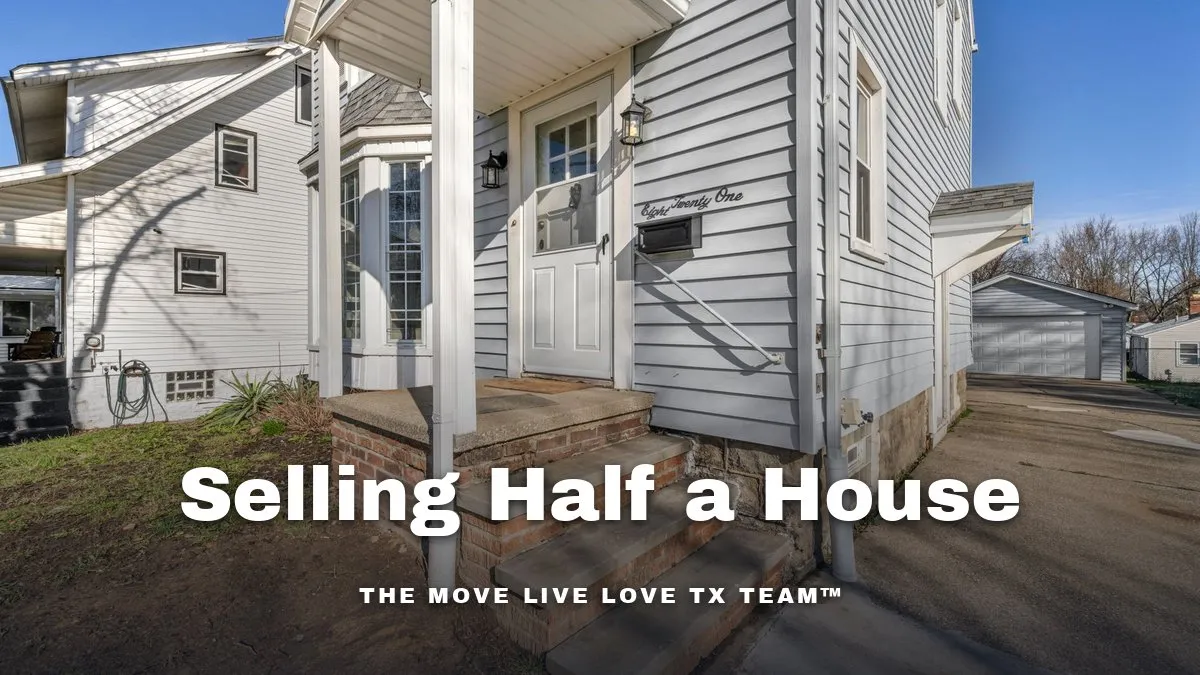
Usually, yes. In Texas, a co-owner who holds title as a tenant in common can sell their own undivided share of a house without the other owners’ permission. What they can’t do is sell the whole house without every owner signing. The catch is the buyer: whoever buys your share becomes a co-owner with the people you were trying to get away from, so very few buyers want it, and the ones who do pay a steep discount.
This question comes up most with siblings who inherited a house, unmarried partners who bought together, and friends or relatives who went in on a property years ago. If you’re one of them and the other owner won’t sell, selling just your share is one of four ways out. It’s usually not the strongest one.
The Four Ways Out of a Co-Owned House
- Sell your share to the other owner. A buyout at a number you both accept. Fastest, cheapest, and the only option where nobody new shows up.
- Sell your share to an outside buyer. Legal without the others’ consent, but the buyer pool is thin and the price reflects it.
- Agree to sell the whole house. Every owner signs a listing, the house sells at full market value, and the proceeds split by ownership share.
- File for partition. Property Code Section 23.001 lets a co-owner ask a court to divide the property, which for a single house almost always means a court-ordered sale. Our piece on forcing the sale of a co-owned house in Texas walks through that process.
Why Half a House Sells for Less Than Half the Price
Picture the buyer of a 50 percent interest. They can’t move in alone, can’t rent the house without the other owner’s cooperation, and can’t borrow against it the normal way. Most mortgage lenders won’t finance a fractional share of a house.
So the buyers are mostly investors who do this on purpose. They pay cash, and they price in the time and legal fees of a partition suit, because that’s often how they cash out. Expect an offer well below half of what the whole house would bring. Selling your share to an investor usually just hands your fight to someone with a lawyer on retainer.
Four Things That Change the Answer
A mortgage. Selling your share doesn’t take your name off a loan you signed. The debt stays on the whole property, and many deeds of trust let the lender call the loan due when any ownership interest changes hands. Call the lender before you sign anything.
Marriage and homestead. If you’re married and the house is your homestead, Texas generally requires both spouses to sign to sell it, even when only one name is on the deed. Our guide on whether both spouses have to sign to sell a house in Texas covers that rule.
Survivorship. Some co-owners hold title with a right of survivorship, meaning the survivor takes the whole property when one owner dies. Selling your share can end that arrangement for your part, which the other owner may not expect. Read the deed.
Inherited houses. When relatives inherited a house together and never signed an agreement about it, Texas’s version of the Uniform Partition of Heirs’ Property Act, in Chapter 23A of the Property Code, can give the other heirs a chance to buy out a share at its appraised value before any court-ordered sale. If that’s your situation, an attorney should look at it before you take an outside offer. For the bigger picture on inherited homes, see what heirs need to know before selling an inherited home.
Start With a Number Both Sides Can See
Most co-ownership standoffs aren’t really about whether to sell. They’re about what the house is worth and who gets what. A buyout, a listing and a partition all start from the same place: a current market value both owners can look at and believe.
That’s work we do for co-owners the same way we do for any seller. Peter Royster has held a Texas real estate license since 2004, and on these sales our job is to give every owner the same numbers at the same time, so the conversation is about the house and not about who knows more.
We’re a real estate team, not attorneys. Anything involving a deed, a partition or an heirship question belongs with a Texas real estate attorney before you sign.
The Move Live Love TX Team™ is a husband-and-wife real estate team with CB&A, Realtors, based in The Woodlands and serving Houston and the surrounding areas. If the whole house ends up on the market, our seller’s guide covers what comes next.
Frequently Asked Questions
- Can I sell my share of a jointly owned property in Texas without the other owner's permission?
- Usually, yes. A co-owner who holds title as a tenant in common can sell or deed their own undivided share without the other owners' consent. What you can't do is sell the whole property without every owner signing.
- What happens when someone buys a co-owner's share of a house?
- The buyer steps into the seller's place as a co-owner, with the same rights the seller had, including the right to use the property and to ask a court for a partition. The other owners don't get to approve the new co-owner.
- Who buys a partial interest in a house?
- Mostly the other co-owners, or investors who specialize in fractional interests. Investors usually pay well below the share's proportional value, because they're buying a lawsuit-shaped asset they may have to partition to cash out.
- Does selling my share get me off the mortgage?
- No. Selling your ownership share doesn't release you from a mortgage you signed. The loan stays on the whole property, and many deeds of trust let the lender call the loan due when any interest transfers, so talk to the lender first.
