

The Woodlands
Can You Put Solar Panels on Your House in The Woodlands?
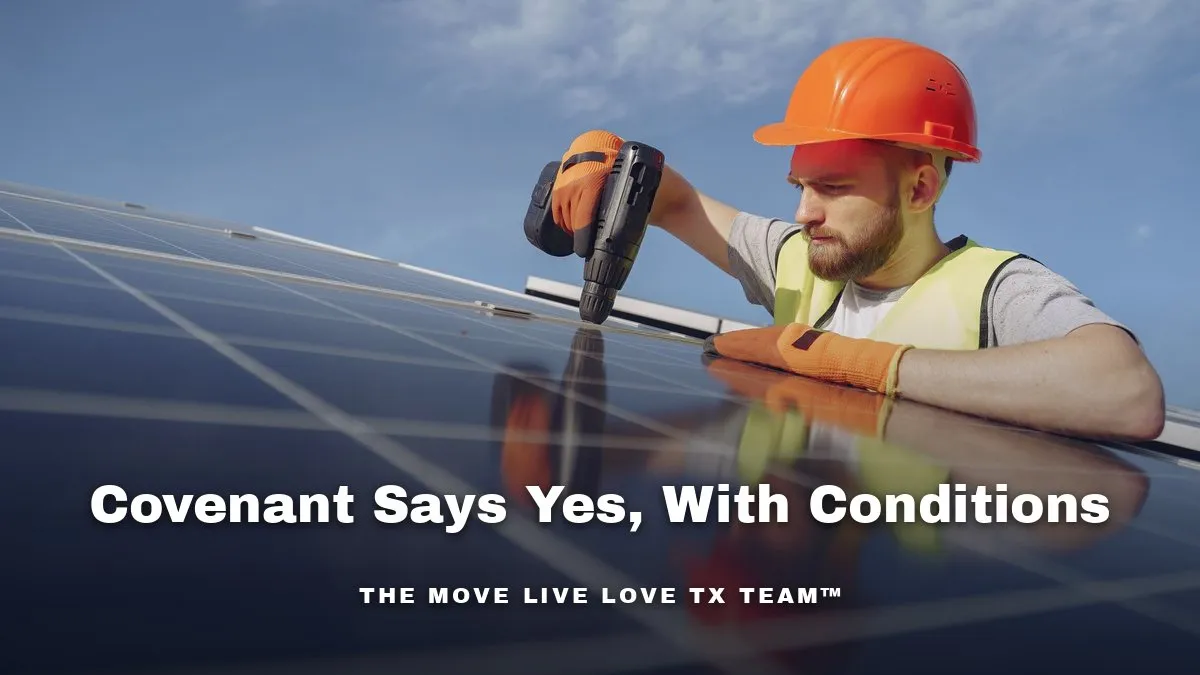
Yes, you can put solar panels on your house in The Woodlands. Texas Property Code Section 202.010 makes any homeowners’ association provision that bans or restricts solar installations void, and that law applies to the covenants that cover homes here the same as anywhere else in the state. What you can’t skip is the approval step: The Woodlands’ Development Standards Committee reviews every exterior change, solar included, before a single panel goes up.
The State Law Behind This
Texas gave homeowners real protection on this specific question back when PACE financing and rooftop solar both started showing up in HOA disputes nationwide. Section 202.010 of the Property Code says a dedicatory instrument, the legal term for the covenants and restrictions that govern a community like The Woodlands, cannot include or enforce a provision that prohibits or restricts installing a solar energy device. An HOA can still regulate a handful of narrow situations: a device a court has found threatens public health or safety, anything installed on common or association-owned property, or a system put up without getting committee approval first. Outside those carve-outs, a flat “no solar” rule doesn’t hold.
What The Woodlands’ Committee Does
Since 2010, The Woodlands Township has managed the covenants that cover properties across the community, and the Development Standards Committee is the body that reviews exterior changes against them, solar panels included. Past reporting on the committee’s own public comments says it applies reasonable placement and appearance standards to every solar project it reviews, and that it has never outright blocked one. We’d treat that history as a good sign, not a guarantee, since every roofline, village, and sightline is different. What The Woodlands’ Deed Restrictions Actually Let You Do to Your Home covers the broader approval process this same committee runs for fences, paint colors, and additions, and solar follows the identical path.
What Can Still Slow You Down
Texas law gives the committee real room to shape how a solar installation looks, even though it can’t block the installation itself. Expect questions or conditions around:
- Where the panels sit on the roof and whether they’re visible from the street or a neighbor’s sightline.
- How the array’s color and framing read against the home’s existing roof and exterior palette.
- Whether the mounting hardware and any ground equipment meet the committee’s general appearance standards.
What the committee can’t do is deny an application outright because a neighbor finds it unattractive, or set a standard so strict it functionally prevents the installation or drives up its cost beyond what’s reasonable. If a proposed system meets the committee’s own minimum requirements, state law says that’s supposed to be enough.
The Step People Skip, and Shouldn’t
The single biggest risk here isn’t the covenant itself. It’s a homeowner who hires an installer, gets the panels up over a weekend, and finds out afterward that skipping the committee’s review is the one thing Texas law still lets an HOA act on. Can You Cut Down a Tree in The Woodlands Without Approval? covers a different exterior change with the exact same lesson: get the approval in writing before the work starts, not after. Submit your plans, get a written decision, and keep that paperwork with your closing file. If you’re buying a home that already has solar installed, ask the seller for that same approval paperwork rather than assuming it exists.
Our Take
We’ve watched more than one Woodlands homeowner assume the covenant was a hard no on solar and never ask the question. It isn’t, and the Township’s own committee has a real process built for exactly this. The Move Live Love TX Team™ is based right here in The Woodlands, so when a client is deciding whether solar makes sense for a specific address, we’re usually the ones pointing them to the Covenants office before the installer, not after. If you’re weighing a solar install ahead of listing, or buying a home that already has one, that’s a conversation worth having early.
Frequently Asked Questions
- Can The Woodlands' covenants legally stop you from installing solar panels?
- No. Texas Property Code Section 202.010 voids any HOA provision that prohibits or restricts installing a solar energy device, and that statute applies to the covenants governing homes in The Woodlands the same way it applies anywhere else in Texas. What the covenant can still do is set reasonable placement and appearance standards.
- Do you need approval before installing solar panels in The Woodlands?
- Yes. Every exterior change in The Woodlands, solar included, goes through the Development Standards Committee before installation, and skipping that step is the one thing that can get a system flagged after the fact. Submit your plans and get a decision in writing before a crew is on the roof.
- Has The Woodlands' committee ever denied a solar panel installation?
- According to past reporting on the committee's own statements, it says it has never outright blocked a solar project, instead applying placement and appearance standards to approved installations. That's a reputation worth confirming for your specific property rather than assuming, since standards can tighten and every roofline is different.
- What can the Development Standards Committee still regulate about solar panels?
- Panel placement, visibility from the street, and how the installation ties into the home's existing roofline and color palette are all fair game under Texas law, as long as the standards don't functionally block the panels or raise their cost by a real amount. A committee can't deny a system that meets its own minimum requirements because a neighbor doesn't like the look of it.
- How long does the Development Standards Committee have to decide on a solar application?
- Texas law requires an architectural review committee to act within a reasonable period, or within whatever timeframe the governing documents set, and if it misses that window the homeowner has real recourse. Ask the Covenants office for the specific timeline before you submit, so you know what to expect and when to follow up.