

Market
Can You Sell a House With Unpermitted Work in Texas?
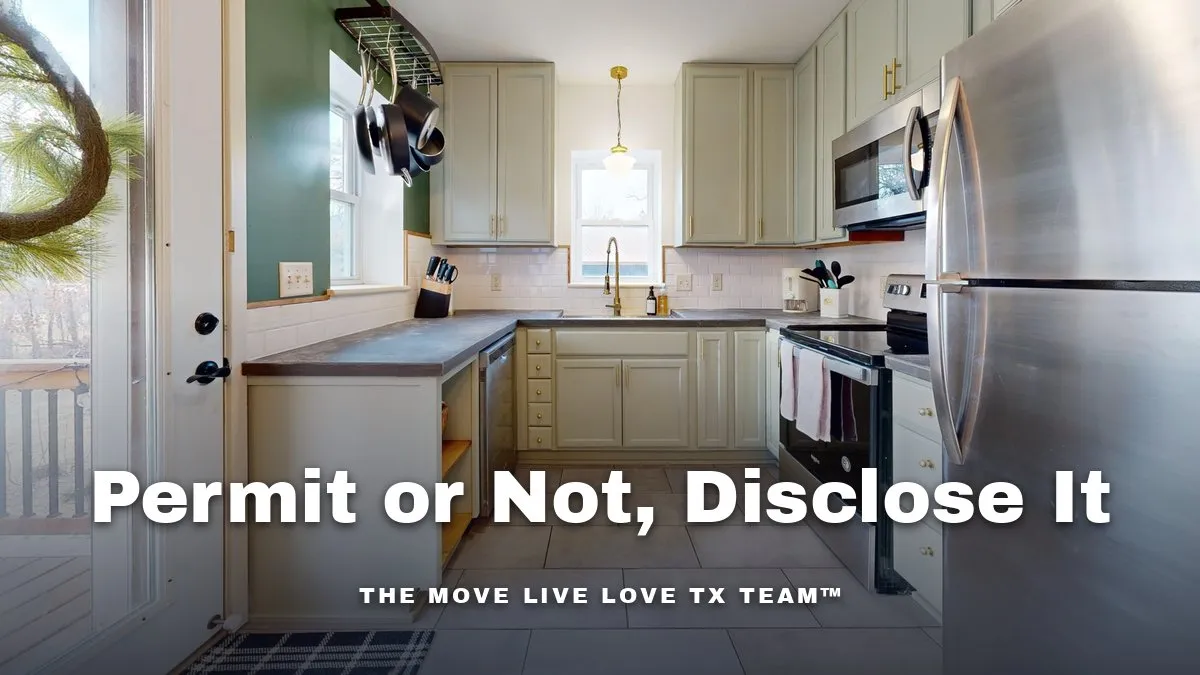
Yes, you can sell a house with unpermitted work in Texas. No state law stops the sale. What the law does require is disclosure: the Texas Seller’s Disclosure Notice asks whether you know of additions, structural changes or repairs made without necessary permits, and if you know, you answer yes. The real question is how that work affects your buyer’s inspection, appraisal and loan, because that is where unpermitted work costs sellers money.
This comes up more than sellers expect. A garage turned into a game room, a patio enclosed into a sunroom, a second bathroom a previous owner added over a long weekend. Sometimes the seller did it. Often they bought the house that way and never knew.
What the Disclosure Form Actually Asks
Under Texas Property Code Section 5.008, most sellers of a home fill out a Seller’s Disclosure Notice. One of its questions asks whether you are aware of room additions, structural modifications, or other alterations or repairs made without necessary permits or not in compliance with building codes in effect at the time.
That question is measured by what you know. You are not expected to research every project a past owner did. But if you built the addition yourself, or the inspector flagged it when you bought, you know, and the form wants a yes with a short explanation. Our guide to what the Texas Seller’s Disclosure Notice requires walks through the rest of the form.
Leaving it off does not make it go away. A buyer’s inspector or appraiser usually finds it, and finding it after you checked “no” turns a pricing conversation into a trust problem.
Where the Address Sits Changes the Rules
Permits are local, so the first question is who has jurisdiction over the house.
Inside Houston city limits, the City of Houston requires a building permit for most residential construction work. The city also says permits can be obtained after the work is done, though it may cost more because of inspection and unpermitted-work fees. The Houston Permitting Center is where that starts.
Outside city limits, county rules apply, and they are lighter than a city’s building code. The Harris County Engineering Department still requires a development permit for development in the county, and work in a flood hazard area needs floodplain approval.
In The Woodlands and many master-planned communities, exterior changes also need covenant or HOA approval. That is a separate question from a building permit, and a buyer’s title company and resale certificate can surface it. Our post on The Woodlands deed restrictions and covenant administration explains how that side works.
Your Four Real Options
Here is how sellers usually handle it:
- Disclose it and sell as is. Simplest. Expect buyers to price the risk, and expect fewer buyers using financing that looks closely at the home’s condition.
- Permit it after the fact. Best when the work is sound. It costs time and fees, and an inspector may need walls or ceilings opened to sign off.
- Bring it back to its original state. Sometimes cheaper than permitting, such as turning an enclosed garage back into a garage.
- Price it in. Get a contractor’s estimate to permit or correct the work, and use that number when you set the price or negotiate repairs.
Why Lenders and Appraisers Care
The buyer’s appraiser decides what counts as living area. Unpermitted square footage is often left out or given less weight, so a 2,400-square-foot house with a 400-square-foot unpermitted addition may appraise like a 2,000-square-foot house. If the contract price assumed the bigger number, someone has to cover the gap. Our explainer on who pays an appraisal gap in a Texas contract covers how that plays out.
Insurance is the other quiet issue. Buyers will want to know their carrier will cover the addition, and work that never met code can complicate a future claim. That is a question for the buyer’s agent to raise early.
Our Take
Peter worked in construction before real estate, and the first thing he does on a house like this is look at the work itself, not the paperwork. Sound work with a missing permit is a fixable pricing question. Work that is not safe is a repair, no matter who buys it.
Here is what we would do if this were our house. Find out which jurisdiction you are in, get one contractor’s estimate to permit or correct it, and decide before you list. Sellers who show up with that number set the terms. Sellers who get surprised by the inspection report negotiate from behind. For the full picture of what a seller pays at closing, see our breakdown of Houston seller closing costs.
The Move Live Love TX Team™ is a husband-and-wife real estate team with CB&A, Realtors, serving Houston and the surrounding areas, from Galveston to Conroe. This is general information, not legal advice. For a specific disclosure question, talk with a Texas real estate attorney.
Frequently Asked Questions
- Is it illegal to sell a house with unpermitted work in Texas?
- No. Texas law does not stop you from selling a house with unpermitted work. What the law does is require most sellers to fill out a Seller's Disclosure Notice, which asks whether you know of additions or repairs made without necessary permits, so the work has to be disclosed if you know about it.
- Do I have to disclose unpermitted work when I sell my house in Texas?
- If you know about it, yes. The Texas Seller's Disclosure Notice under Property Code Section 5.008 asks about room additions, structural changes, alterations or repairs made without necessary permits or not in compliance with building codes in effect at the time. Answer it as you actually know it.
- Can you get a permit after the work is done in Houston?
- Often, yes. The City of Houston says permits can be obtained after work is done, though it may cost more because of inspection and unpermitted-work fees. Inspectors may need to see inside walls or ceilings to sign off, so get a quote before you list.
- Will an appraiser count an unpermitted addition as living space?
- Not always. Appraisers often leave unpermitted square footage out of the living area or give it less weight, which can lower the appraised value and leave a gap between your contract price and what the lender will finance.
- What if my house is outside Houston city limits?
- Then the city's rules may not apply, and your county or a smaller city sets them. Harris County, for example, requires a county development permit for development and a floodplain permit in flood hazard areas. Check with whoever has jurisdiction over your address.
