

Veterans
Can a Veteran Get a VA Loan on a Houston Home With Leased Solar Panels?
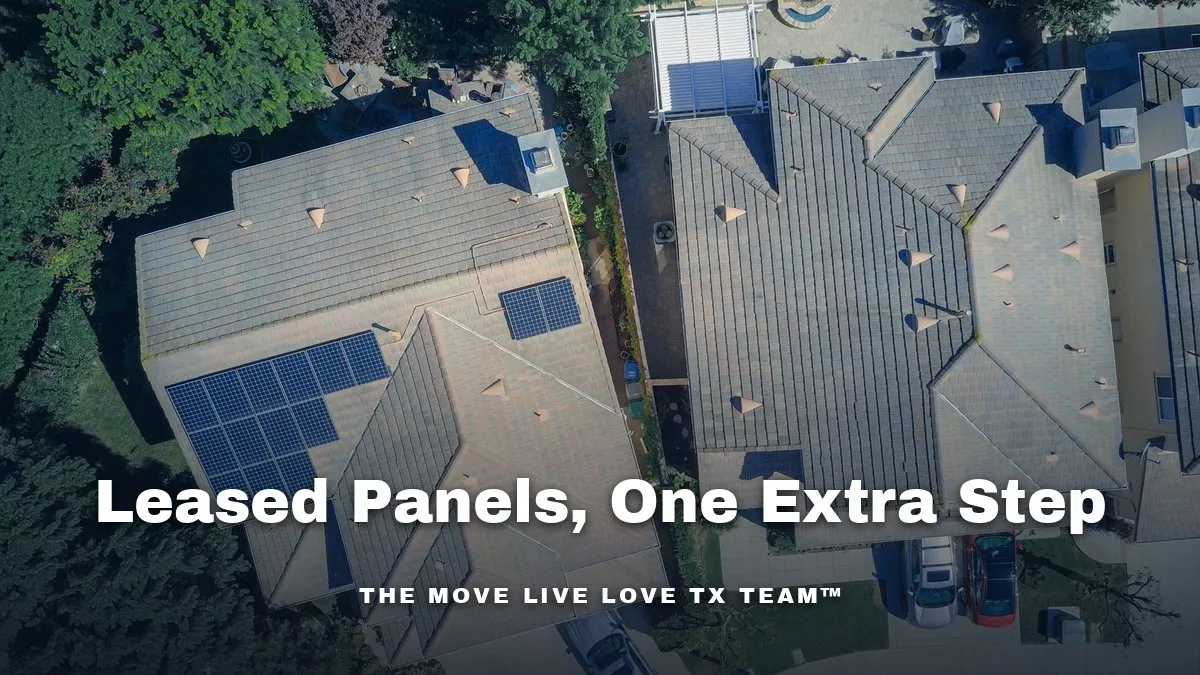
Usually, yes, a veteran can get a VA loan on a Houston home with solar panels, but if those panels are leased rather than owned, there’s a lien filing to clear first. Texas doesn’t allow residential PACE loans the way some other states do, so the real risk a VA buyer faces here isn’t a PACE assessment. It’s a solar lease or power purchase agreement with a filing the solar company won’t release before closing.
Why This Even Comes Up in Houston
Solar has grown fast across the Houston area and The Woodlands over the past several years, and a meaningful share of those installs were never purchased outright. They were leased, or financed through a power purchase agreement where the homeowner pays for the electricity the panels produce rather than owning the hardware. Either arrangement usually comes with a UCC filing, the lien-like paperwork a solar company records to protect its equipment. That filing is routine and harmless most of the time. It becomes a problem the moment a VA loan is involved and nobody checks it before the option period runs out.
Texas Doesn’t Have the PACE Problem Other States Do
If you’ve read about PACE loans causing VA closing headaches in Florida or California, it’s worth knowing that risk mostly doesn’t exist here. Texas’s PACE Act, Local Government Code Chapter 399, limits eligible properties to commercial, industrial, and multifamily buildings with five or more units. An ordinary single-family home in Houston or The Woodlands can’t legally carry a residential PACE assessment under current Texas law. Peter Royster came up through construction and mortgage lending before he got his Texas real estate license in 2004, and this is exactly the kind of state-specific detail that trips up a lender who learned VA solar rules somewhere else and assumes Texas works the same way.
The Real Risk: a Leased System’s Lien
What VA Circular 26-16-18 and most lenders’ own underwriting guides worry about is a UCC filing tied to a leased or PPA-financed solar system. Two sharply different situations hide behind that one filing:
- A precautionary filing covering only the solar equipment. This is the common, low-stakes version. It names the panels as collateral, not the house or the land underneath it, and most VA lenders treat it as a minor title issue that doesn’t block closing.
- A fixture filing that treats the panels as part of the house itself. This is the version that can genuinely stall or kill a VA loan, because the solar company’s claim sits on the real property records and has to be subordinated or released before the lender will fund.
A seller with leased panels should expect a buyer’s lender to ask for the lease agreement and either a payoff quote or a subordination letter from the solar company, well before closing week, not during it.
What a VA Appraisal Does and Doesn’t Count
A VA appraiser isn’t supposed to add leased or PPA panels to the home’s value, since the buyer isn’t acquiring that equipment, only inheriting the monthly lease payment. Owned panels, by contrast, can add real contributory value the same way a new roof or a fence does. What Can Fail a VA Appraisal in Houston? Minimum Property Requirements, Explained covers the broader list of things a VA appraiser is checking for on a Houston home, solar or not.
What to Ask Before You Write the Offer
If a Houston listing mentions solar, ask these questions before, not after, you’re under contract:
- Are the panels owned outright, leased, or under a power purchase agreement?
- If leased, can the seller provide the lease agreement and a current payoff or transfer quote?
- Is there a UCC filing on record, and does it cover only the equipment or the house as a fixture?
- Will the solar company issue a subordination or release letter in time for closing?
Getting these answered early is the same instinct behind What a Flood Zone Means for Your VA Loan in Houston: a VA loan can absorb a lot of real-world complications, but only if someone surfaces them before the clock is running out on your option period.
Our Take
A solar lease shouldn’t scare off a veteran buyer who found the right house. It should move up the checklist, not off it. The Move Live Love TX Team™ has Vicky Royster working these questions on every VA file as a certified Military Relocation Professional, and the pattern is always the same: the deals that close on time are the ones where somebody asked about the panels on day one instead of day twenty. Our VA Benefits the Smart Way Guide covers the rest of what a VA buyer in Houston needs to have ready before making an offer.
Frequently Asked Questions
- Can a VA loan buy a Houston house with solar panels on it?
- Yes, if the panels are owned outright by the seller, a VA loan treats them like any other home improvement. The complication only shows up when the panels are leased or financed through a power purchase agreement, which is common enough in Texas that every veteran buyer should ask the question before writing an offer.
- What's the difference between owned solar and leased solar for a VA loan?
- Owned solar panels, whether paid in cash or financed through a loan the seller is paying off at closing, come with the house free and clear and add no complication. Leased panels or a power purchase agreement mean the seller doesn't own the equipment, and the solar company has a filing on record that has to be dealt with before a VA loan can close.
- Does Texas have PACE loans that could complicate a VA purchase?
- Not for a single-family home. Texas's PACE Act, Local Government Code Chapter 399, limits eligible properties to commercial, industrial, and multifamily buildings with five or more units, so an ordinary Houston house legally can't carry a residential PACE assessment the way homes can in California or Florida. If you see a PACE lien on a Houston house's title report, something about that property doesn't fit the usual pattern and is worth a closer look.
- Can the solar company's lien stop a VA loan from closing?
- It can, if the solar company won't subordinate or release its UCC filing before closing. A filing that only covers the panels themselves is usually a minor title issue; a filing that attaches to the house itself as a fixture is the one that can genuinely hold up or kill the loan until it's resolved.
- Will leased solar panels add to the home's appraised value?
- No. VA appraisal guidance treats leased or PPA-financed panels as excluded from the home's value, since the buyer isn't acquiring the equipment, only taking over the lease payments. Owned panels can add contributory value; leased ones generally can't.