

Divorce
What Happens to Your Home When Your Spouse Is Hiding Assets in a Texas Divorce?

If you’re going through a divorce in Texas and something about the financial picture isn’t adding up, you may be asking:
“What if my spouse is hiding assets — and what does that mean for what happens to our home?”
This is more common than most people realize, and it’s more serious than most people initially treat it. When one spouse conceals assets during a Texas divorce, they’re not just being dishonest — they’re interfering with a court’s ability to divide the marital estate fairly. Texas law takes that seriously, and the consequences for the spouse doing the hiding can be significant.
But knowing something is wrong and being able to prove it are two different things. And understanding how hidden assets connect specifically to the home — the biggest asset in most divorces — is what this article is about.
The Move Live Love TX Team™ is a Houston, Texas real estate team based in The Woodlands that helps homeowners navigate life transitions like divorce while guiding them to selling smarter across Houston and surrounding areas. Both Peter and Vicky have been through divorce personally. We’re not attorneys, and the legal side of hidden assets absolutely requires one — but as specialists in divorce real estate, we’ve sat across the table from enough of these situations to know the warning signs, ask the right questions, and make sure the real estate side of the equation is locked down in a way that protects your financial position from day one.
Here’s what you need to know.
The Reality of This Situation
Texas is a community property state, which means most assets acquired during the marriage belong to both spouses and need to be divided fairly at divorce. That includes the home, bank accounts, investment portfolios, retirement accounts, business interests, and anything else of value built during the marriage. When one spouse deliberately conceals assets to avoid sharing them, they are violating Texas law — and courts have broad authority to correct it and penalize the spouse who did it.
The challenge is that sophisticated asset hiding rarely looks dramatic. It doesn’t always look like a secret bank account or a suitcase full of cash. More often it hides behind complexity, timing, and structures that can be genuinely difficult to detect without knowing what to look for. Numbers technically reconcile. Documents arrive — just late, and not quite answering what you actually asked. Explanations are detailed yet somehow incomplete. That information gap between what one spouse knows and what the other can see is where most hidden asset situations live.
Warning Signs to Watch For
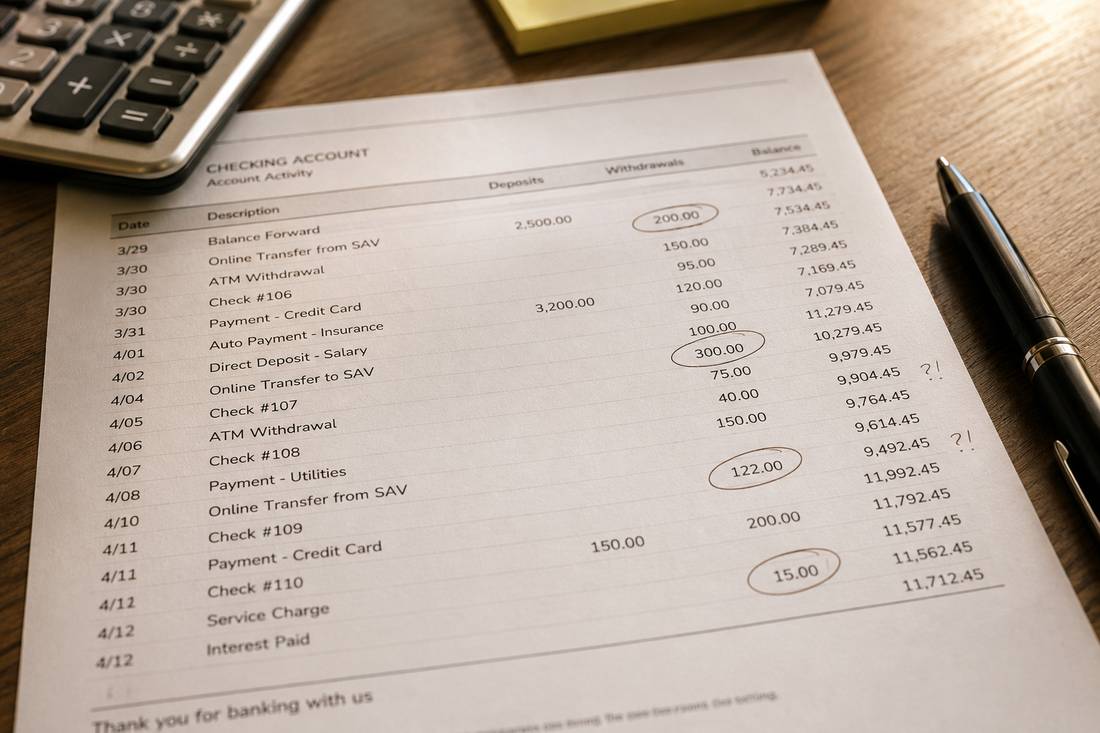
There are patterns that show up consistently when a spouse is hiding assets in a Texas divorce. None of these is conclusive on its own, but a combination of them — especially when they appear suddenly around the time of divorce — deserves attention.
Unexplained withdrawals or transfers from joint accounts are one of the most common early signs. If money is moving to accounts you don’t recognize or to third parties without clear explanation, that’s worth documenting immediately. Sudden business losses or declining income reported by a self-employed spouse right around the time of divorce are another pattern — income that was consistently strong for years suddenly drops in the documents just as the settlement is being negotiated. A spouse who becomes secretive about financial accounts, mail, or statements they previously shared openly is another signal. So is hiring financial advisors you don’t know about, or suddenly deferring income, bonuses, or commissions until after the divorce is finalized.
Real estate specifically can be used in hidden asset schemes too. Undervaluing a property, transferring ownership to a relative or business entity, or claiming a jointly owned property is solely separate property are all tactics that come up in Texas divorce cases. This is one area where having an independent real estate valuation — not one provided by or recommended by your spouse — is critical to protecting yourself. As divorce real estate specialists, providing that kind of credible, independent valuation is exactly what we do — and having been through divorce ourselves, we understand what’s at stake in a way that goes beyond the transaction.
What “Fraud on the Community” Means in Texas
Texas courts operate under a legal concept called “fraud on the community” — which applies when one spouse wastes, hides, or fraudulently transfers community assets in a way that disadvantages the other. This is grounded in Texas Family Code § 7.009, and it gives courts real tools to address it.
When a court finds that fraud on the community occurred, it can reconstitute the marital estate — essentially adding back in the assets that were hidden or wasted — and divide the reconstituted estate rather than just what’s left. It can also award the innocent spouse a disproportionate share of the remaining assets to compensate for what was concealed. In extreme cases, courts can impose sanctions, award attorney’s fees, or refer the matter for criminal prosecution for perjury or fraud. The leading Texas Supreme Court case on this is Schlueter v. Schlueter, 975 S.W.2d 584 (Tex. 1998), which established the framework courts still use today.
The bottom line is that Texas law does not reward dishonesty in divorce proceedings, and judges have broad authority to make things right when concealment is proven.
How This Connects Directly to Your Home
The home is where hidden asset concerns and real estate intersect most directly, and it’s worth being specific about how that plays out.
If your spouse is undervaluing the home — claiming it’s worth less than it actually is to reduce the equity that needs to be divided — an independent market valuation from a qualified agent who knows your specific Houston neighborhood is your first line of defense. A divorce real estate specialist who has no relationship with your spouse and no stake in the outcome gives both your attorney and the court a credible, market-based number to work from. That number becomes very hard to argue against when the comparable sales support it. This is exactly the kind of work we do — and having been through divorce ourselves, we understand what’s at stake in a way that goes beyond the transaction.
If your spouse has transferred the home or any interest in it to a relative, friend, or business entity without your knowledge or consent during the divorce — that’s a serious legal issue. The Texas automatic temporary restraining order that kicks in when divorce papers are served is specifically designed to prevent this kind of transfer. Any sale, transfer, or encumbrance of marital property made in violation of that order can be reversed by the court, and the spouse who made it faces serious legal consequences.
If your spouse is claiming the home is separate property when you believe it was purchased during the marriage with community funds, the burden of proof matters enormously. Your attorney can use the discovery process to pull records that establish when the home was purchased, with what funds, and how it has been treated during the marriage.
For more on how home equity gets divided in a Texas divorce and what protections exist, this is worth reading: how is home equity divided in a divorce in Texas.
Download Our Houston Divorce Home Selling Guide
If you’re navigating a divorce home sale and want to understand the full process — including how to protect your financial position — our guide walks through it clearly.
Download the Houston Divorce Home Selling Guide here.
What to Do If You Suspect Your Spouse Is Hiding Assets
The most important thing to understand is that acting early matters. The earlier hidden assets are identified, the easier they are to trace and recover. Waiting — hoping things will become clearer, or not wanting to escalate the conflict — gives the concealing spouse more time to move things further out of reach.
Tell your attorney immediately if something doesn’t add up. They have legal tools available that you don’t — discovery requests, subpoenas, depositions, and the ability to request a forensic accountant who specializes in finding exactly what’s been hidden. Texas courts expect full financial disclosure from both parties, and your attorney can compel that disclosure through formal legal processes.
In the meantime, start documenting everything you can access right now. Bank statements, tax returns, pay stubs, credit card statements, property records, business records if applicable — gather and preserve copies of everything you can legitimately access. Once the divorce is filed and discovery begins, some of this documentation becomes harder to obtain quickly. What you already have in hand is valuable.
Don’t move money yourself in response. It might feel like a protective instinct, but transferring assets in anticipation of divorce creates legal exposure for you and undermines your credibility with the court. The right move is to document, attorney up, and let the legal process do what it’s designed to do.
What Happens If Hidden Assets Are Discovered After the Divorce Is Final
This is a question worth knowing the answer to before you assume it’s too late. Texas law may allow a Suit for Post-Dissolution Partition if community property was not divided during the original divorce — including property that was concealed. In certain circumstances, a person may have up to two years from the discovery of the issue to pursue legal action.
That’s a meaningful protection, but it’s also a significantly harder and more expensive path than catching it during the divorce process. The court’s tools are more limited after a final decree, and recovering assets that have moved multiple times through different hands or entities is complex. The lesson is to pursue it during the divorce if at all possible — and to work with an attorney who knows how to use the discovery process effectively.
For more on how the credit and financial picture connects to protecting yourself during this process, this is worth reading alongside this article: how to protect your credit during a divorce in Texas.
What Goes Wrong Most Often
The most common mistake in this situation is second-guessing your own instincts. People notice things that don’t add up — numbers that shifted suddenly, accounts they’ve never seen, explanations that are detailed but somehow never answer the actual question — and then talk themselves out of acting on it because they don’t want to seem paranoid or escalate the conflict. By the time the picture becomes clear enough that there’s no doubt, assets have moved further and the legal process is more complicated. If something doesn’t add up, say something — to your attorney, not to your spouse.
Our Honest Advice
If we were working with someone in this situation, the first thing we’d bring to the table is something no attorney or forensic accountant can provide — an accurate, independent valuation of the home grounded in what’s actually selling in your specific Houston neighborhood right now. That number, documented by divorce real estate specialists with the market data to back it up, creates a credible baseline that’s very difficult for a concealing spouse to argue against in court. It’s one of the most concrete protective steps available to you right now, and it’s exactly what we do.
Everything else — the discovery process, the forensic accounting, the legal remedies — belongs to your attorney. But having the real estate side of the picture locked down with accurate, defensible numbers is something we can handle for you right now. And when those two tracks — the legal and the real estate — are working together from the beginning, the outcome is almost always better for the party who was wronged.
We’re Here When You’re Ready
If you’re navigating a divorce in Houston and concerned about whether you’re getting the full picture on your home’s value — or on what the marital estate actually contains — we’re here to help with the real estate side of that equation. As divorce real estate specialists who have been through this personally, we know what’s at stake — and we know how to make sure the real estate side of your settlement reflects the full value of what you’ve built. An accurate, independent valuation from a team that specializes in exactly this situation is one of the most concrete protective steps you can take right now.
Download our Houston Divorce Home Selling Guide to get oriented on the full process, or reach out directly and let’s have a real conversation about your situation.
Frequently Asked Questions
- What happens if a spouse is hiding assets in a Texas divorce?
- Texas courts can reconstitute the marital estate to add back hidden or wasted assets, award the innocent spouse a disproportionate share, and in extreme cases impose sanctions or refer the matter for criminal prosecution.
- What warning signs suggest a spouse might be hiding assets?
- Unexplained withdrawals from joint accounts, sudden business losses or declining reported income, secrecy about financial accounts, and deferring income or bonuses until after the divorce is finalized.
- What does 'fraud on the community' mean in Texas?
- A legal concept under Texas Family Code § 7.009 that applies when one spouse wastes, hides, or fraudulently transfers community assets to disadvantage the other, giving courts real tools to correct it.
- How can hiding assets connect directly to the marital home?
- A spouse might undervalue the home, transfer ownership to a relative or business entity, or falsely claim a jointly owned property is separate property — an independent valuation is the first line of defense.
- Can hidden assets be pursued after a Texas divorce is already final?
- Yes, in some cases — a Suit for Post-Dissolution Partition may allow up to two years from discovery to pursue previously undivided or concealed property, though it's a harder path than catching it during the divorce.