

Market
What Is a Master-Planned Community, and Why Do So Many Houston-Area Buyers Want One?
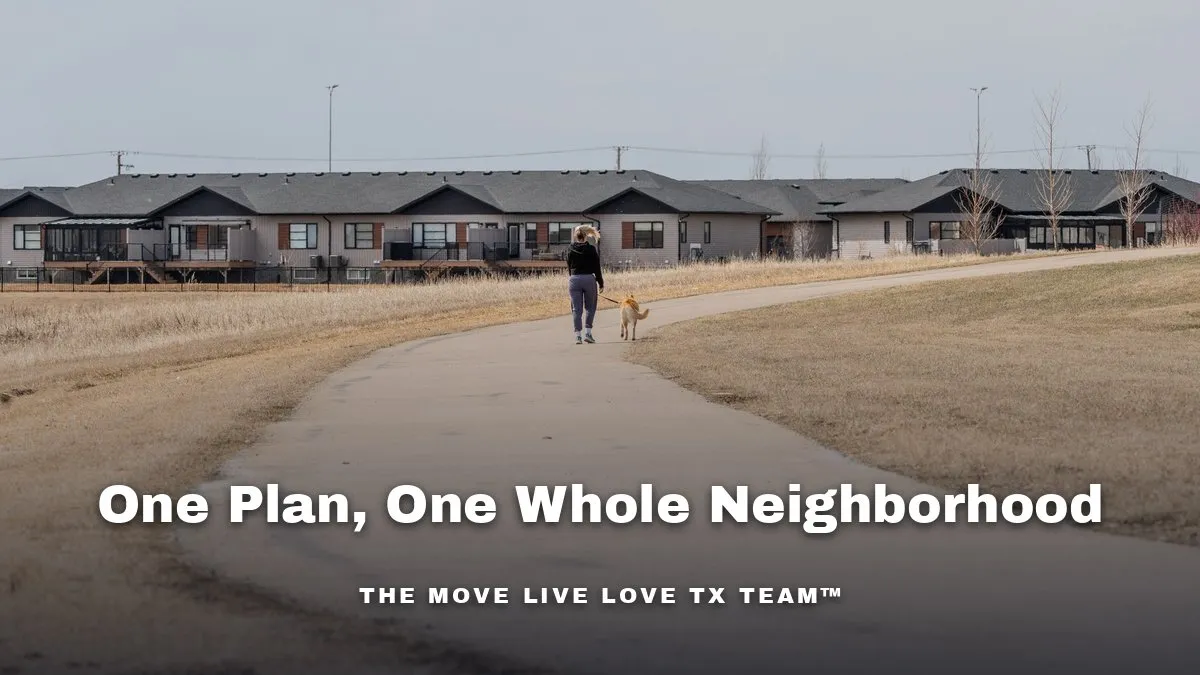
A master-planned community is a large neighborhood where one developer designs the homes, the parks, the trails and often the shopping together from the start, instead of building it lot by lot over time. Houston has more of the nation’s top-selling ones than any other metro area, and nine Houston-area communities landed in RCLCO’s national top 50 for home sales at the midpoint of 2026, with Tamarron, Bridgeland and Sunterra all cracking the top ten.
The Move Live Love TX Team™ is a husband-and-wife real estate team serving Houston and the surrounding areas, helping people make the move that comes next. We show buyers master-planned communities every week, and the question we hear most is some version of “is this worth the extra money,” so here’s the honest breakdown.
Where This Started in Houston
Friendswood Development is usually credited with bringing the concept to this market, starting with Clear Lake City in 1962. The idea was simple even if the execution wasn’t: lay out the whole community on paper first, homes, green space, schools and retail together, so residents could live, work and spend their weekends without constantly driving out of the neighborhood. The Woodlands followed on a much bigger scale, and today it anchors roughly 28,000 acres north of the city. Katy’s Cinco Ranch, Cypress’s Bridgeland, and dozens of others followed the same playbook on smaller footprints.
One reason this model took off here and not everywhere: Houston has no zoning code. A developer who assembles a large enough tract can build out one connected vision without fighting an existing patchwork of zoning restrictions the way a developer in Dallas or Austin might. That’s a structural advantage specific to this market, not a style choice.
What You’re Paying For, Specifically
The HOA dues and the price premium on a master-planned home usually buy a short, specific list of things:
- Maintained parks, trails and green space that a buyer doesn’t have to mow or insure
- A village or town-center structure, so a coffee shop, a gym or a grocery store is often a short walk or golf-cart ride away, not a highway exit away
- Entry monuments, lighting and landscaping that a regular subdivision doesn’t fund collectively
- Deed restrictions that keep the neighborhood looking consistent over time, for better or worse
What it doesn’t automatically buy is a better-built house. A master-planned community and a standalone subdivision can use the exact same builders and floor plans; the difference is almost entirely in the land plan and the shared amenities around the house, not the house itself.
The Tradeoffs Nobody Mentions at the Sales Center
Higher HOA dues are the obvious one, but the real cost is usually the combination of dues plus a tax rate that often includes a Municipal Utility District assessment on top of the standard county and school rates. Two homes priced within $20,000 of each other, one inside a master-planned community and one outside, can carry monthly payments several hundred dollars apart once taxes and dues are both counted. Deed restrictions are the other underrated cost: stricter rules on paint colors, fencing, parking and even what you can park in your own driveway, enforced by an HOA with real teeth to fine you.
Peter has walked enough closings to say this plainly: the amenities are real, but they’re financed, and that financing shows up every month, long after closing day is behind you. Before falling for a resort-style pool and a mile of lit trails, run the full monthly number, not the sale price alone.
Who This Fits, in Practice
A family that wants built-in activities for kids without organizing every outing themselves. A buyer who’s moving from out of state and wants an instant sense of community rather than building one from scratch. Someone who plans to be in the home long enough that the HOA-funded upkeep and resale consistency pay for themselves.
It’s a weaker fit for a buyer who wants architectural freedom, doesn’t want anyone telling them what they can park in their driveway, or is stretching the budget to the edge already, where an extra few hundred dollars a month in dues and MUD taxes is the difference between comfortable and tight. If you’re comparing a specific master-planned community to the acreage alternative nearby, Benders Landing Estates is a good example of what that tradeoff looks like in the Spring and Woodlands corridor, and Woodson’s Reserve shows the newer master-planned side of the same area.
Our Take
We’re not going to tell you every buyer needs a master-planned community, because plenty of our clients are happiest in an older, unrestricted neighborhood with a lower monthly bill and nobody checking their fence color. The Move Live Love TX Team is a husband-and-wife real estate team serving Houston and the surrounding areas, helping people make the move that comes next, and that includes telling you honestly when the resort-style neighborhood isn’t worth the extra few hundred a month for how you live day to day.
The Move Live Love TX Team is a husband-and-wife real estate team serving Houston and the surrounding areas, helping people make the move that comes next, and the right call on a master-planned community depends on your budget, how long you plan to stay, and how much you’d use the amenities you’d be paying for. We’d rather walk through the real monthly numbers with you before you fall for a model home than let you find out the hard way after closing.
Frequently Asked Questions
- What makes a neighborhood a master-planned community?
- A single developer lays out the whole project before the first home is built, deciding where the villages, parks, trails, schools and often the retail will go. A regular subdivision is usually rows of lots platted over time; a master-planned community is designed as one connected place from the start.
- Are homes in a master-planned community more expensive than a comparable home outside one?
- Usually, yes, because the amenities and the land set aside for parks and trails get built into the price and the HOA dues. The gap varies a lot by community, so compare the all-in monthly cost, not the list price alone, before you decide it's out of reach.
- Why does Houston have so many master-planned communities?
- Houston has no zoning code, which makes it easier for a single developer to buy a large tract and build out an entire master plan without fighting a patchwork of existing zoning rules. That is a big part of why the region leads the country in master-planned community sales.
- Do master-planned communities always have an HOA?
- Nearly always. The shared parks, trails, entrances and amenity centers need someone to maintain them, and that's what the HOA dues pay for. Read the HOA's deed restrictions before you buy, since they tend to be stricter than a typical neighborhood's.
- Is a master-planned community a good fit for every buyer?
- No. Buyers who want more architectural freedom, a lower monthly carrying cost, or no HOA at all are often better served outside one. It's a genuine tradeoff, not an upgrade everyone should want.